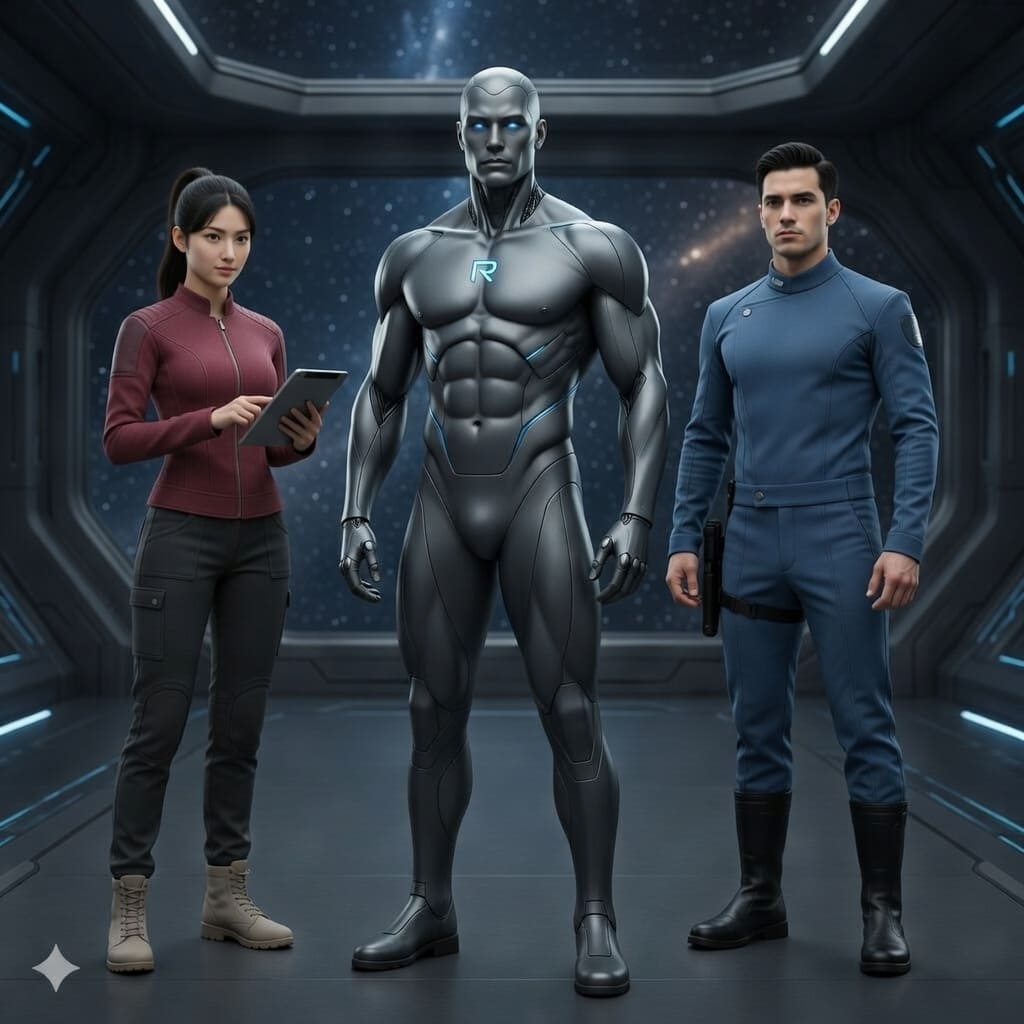
Ginnie, Robojit, and Victorson assemble in the first unified frame of the Robojit AI-generated cinematic universe.
Robojit Universe Revolutionizes AI Production with Dual-Trio Ensemble Stability
This “modular production methodology” represents a significant shift in how entertainment properties can be prototyped.
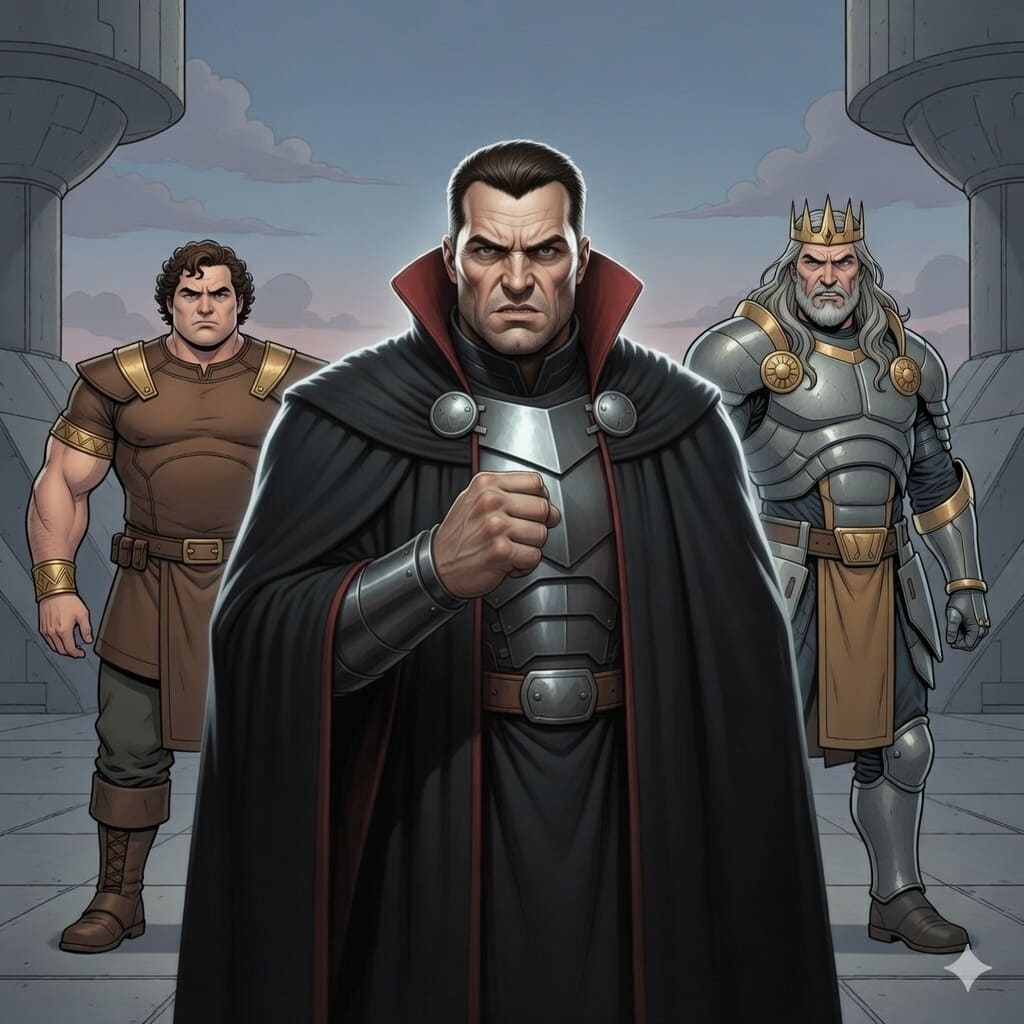
The Robojit AI-assisted production experiment has reached a major structural milestone by confirming identity-consistent multi-character composition for its second “power axis,” comprising the characters Zootaroo, Donaldo, and Goodhat. This achievement marks the first time the Robojit Universe has successfully stabilized two independent three-character groups using a controlled AI workflow, following the earlier validation of its first core trio: Ginnie, Robojit, and Victorson.
Engineering Ensemble Integrity
Unlike typical generative AI systems, which often struggle with facial drift, proportion distortion, and hierarchy collapse when multiple characters occupy a single frame, the Robojit pipeline is designed to enforce strict “canonical stability”. Each character is first “locked” into a canonical form with defined facial geometry, silhouette discipline, and costume architecture.
Only after achieving this stability are multi-character compositions attempted in a cinematic 16:9 frame. Recent results for the second trio confirmed accurate height hierarchies, preserved warrior stances for Zootaroo, and the visual dominance of Donaldo through posture and framing. This success transforms the project from mere “AI-generated visuals” into a controlled production system.
The Three-Phase Repeatable Pipeline
The Robojit methodology, created by mediapreneur Rakesh Raman for the science-fiction franchise Robojit and the Sand Planet, operates through three distinct development phases:
- Phase 1 (Canon Before Spectacle): Establishing and archiving “lock sheets” for all six core characters—Robojit, Victorson, Ginnie, Donaldo, Goodhat, and Zootaroo—to ensure identity continuity before spectacle.
- Phase 2 (Multi-Character Composition): Using reference-conditioned generation to maintain facial geometry, body proportions, and texture integrity across ensemble shots.
- Phase 3 (Motion Prototype): Generating synchronized dialogue and movement while maintaining posture, lighting, and texture integrity over temporal motion.
Modernizing the Pre-Production Cycle
This “modular production methodology” represents a significant shift in how entertainment properties can be prototyped. By integrating human authorship with generative tools, the Robojit project allows narrative and cinematic proof-of-concept to evolve simultaneously, rather than in traditional, high-cost production silos.
The experiment suggests that independent creative teams can now validate character chemistry and screen presence early in development, significantly reducing early capital burn and modernizing the pre-production cycle for large-scale IP. With two trios now validated, the project is moving toward its next major test: a full six-character ensemble composition.
About Robojit and the Sand Planet
Robojit and the Sand Planet is an original, creator-owned science-fiction franchise developed by mediapreneur Rakesh Raman. Conceived as a long-form narrative universe, the project explores themes of intelligence, power, restraint, and identity through the lens of human and synthetic coexistence.
The Robojit initiative is currently being developed through an AI-assisted production pipeline, combining human authorship with emerging generative tools for visual prototyping, storytelling experiments, and transmedia exploration. The pipeline is an ongoing exercise and continues to evolve with each stage of development.
Robojit Website | IMDb | FilmFreeway | ISA | YouTube | Twitter (X) | Facebook